Grid-Down & Extended Outage
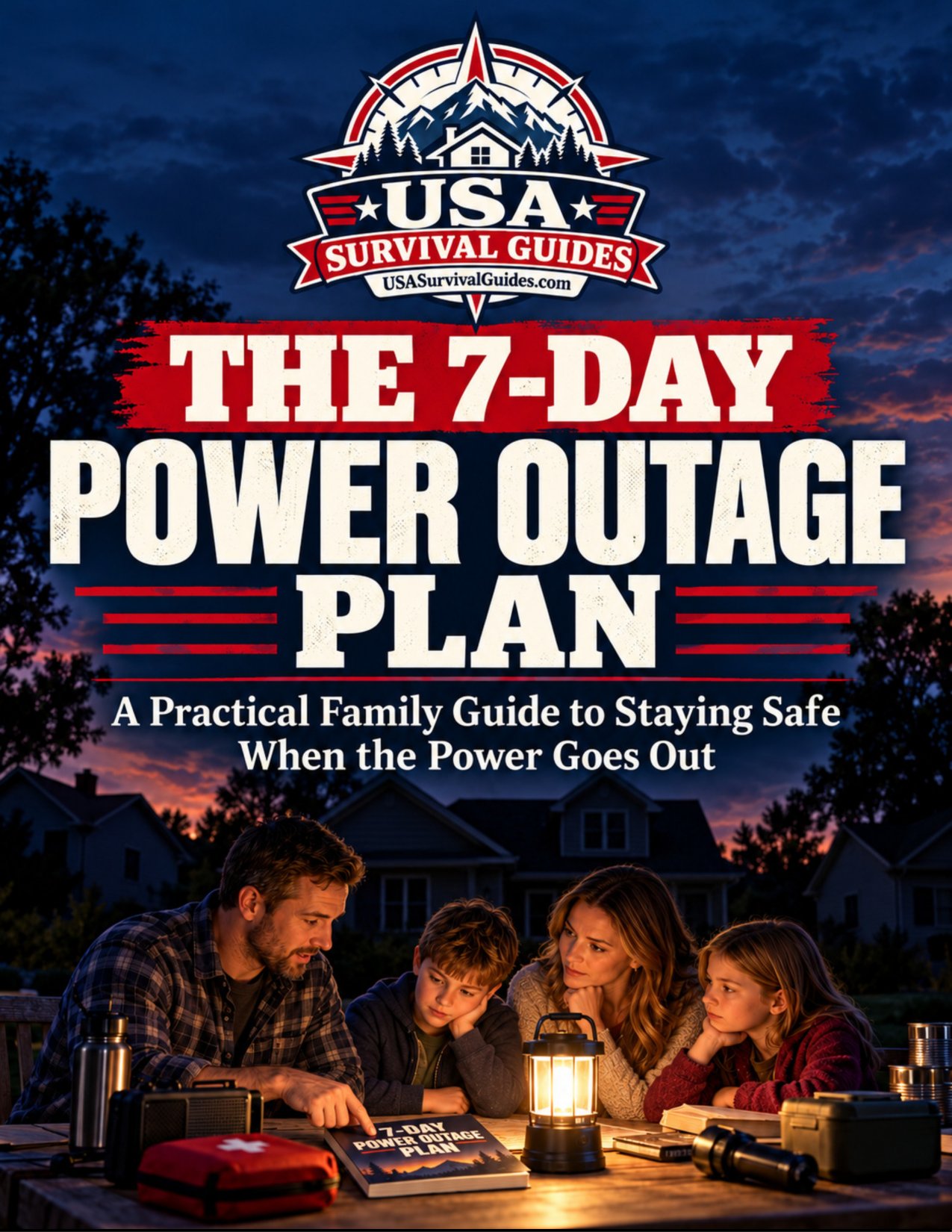
The 7-Day Power Outage Plan
A Practical Family Guide to Staying Safe When the Power Goes Out
A step-by-step family plan for the first 15 minutes, the first hour, and a full week without power.
Get this guide
Purchase links coming soon
This guide will be available through third-party retailers in Digital PDF, Digital eBook and Printed Hardcopy formats. Purchase links will appear here as each format becomes available.
Ask us about availabilityFor educational and informational purposes only. Please read the full disclaimer before using this guide.
Look inside
Preview sample pages from this guide
Select any page to read it full size.
About this guide
What you will learn
The first minutes of a power outage are for people, immediate hazards, and information. You do not need to solve every problem at once. The 7-Day Power Outage Plan is a 59-page practical family guide that takes you from the moment the lights go out through a full week without electricity, then helps you recover and improve your plan afterward.
Start here, one step at a time
The guide opens with visual quick-start pages: check everyone, find a flashlight and move carefully, stay away from wires, smoke, and floodwater, and check local alerts. A second visual page helps you build your household's first-hour plan. From there, each chapter builds on the last so your household always knows the next sensible step.
What's inside
- Chapter 1: The First 15 Minutes, covering people, hazards, medical equipment, and noting when the outage began
- Chapter 2: Your Household's First Hour, covering who is home, what is needed, and who to contact
- Chapter 3: Water, Sanitation, and Medications, including setting a water goal
- Chapter 4: Keeping Food Safe, with refrigerator and freezer decisions based on official food-safety charts
- Chapter 5: Light, Phones, and Communication, including a simple check-in message
- Chapter 6: Staying Warm or Cool Safely, with carbon monoxide precautions
- Chapter 7: Children, Older Adults, and Pets
- Chapter 8: Deciding When to Leave: stay, get help, or leave
- Chapter 9: A Seven-Day Outage Plan, with a daily family check and a seven-day overview
- Chapter 10: Recovery and Improving Your Plan
Designed to be used, not just read
Each section pairs a Plan Ahead box with suggested quantities, such as one flashlight per person and a replacement set of batteries for each light, and a Situation Assessment box with the questions to ask in the moment. Practice It prompts encourage short drills, like walking the route from each bedroom to an exit with a flashlight. Household worksheets and checklists at the back give you space to record contacts, supplies, medical backup plans, and decisions so nothing depends on memory during a stressful night.
Based on authoritative sources
Guidance throughout draws on public health and safety organizations including the CDC, FoodSafety.gov, FDA, the U.S. Consumer Product Safety Commission, the National Weather Service, and FEMA, along with the American Red Cross and university extension material. Numbered references connect the text to a full source list so you can confirm current recommendations before and during an emergency.
Who it's for
Families, couples, and individuals who want a calm, realistic plan for a multi-day outage, including households with young children, older adults, pets, or someone who depends on powered medical equipment. Whether the outage comes from a summer storm or a winter blizzard, this guide helps you stay organized, safe, and in control for seven days and beyond. It is also a strong foundation for our winter-specific and quick-reference titles.
References
Official Sources & Further Reading
Our guides draw on guidance from government agencies and other authoritative organizations. Explore the sources referenced in this guide below.
Government agencies
Centers for Disease Control and Prevention (CDC)
FoodSafety.gov
U.S. Consumer Product Safety Commission (CPSC)
U.S. Food and Drug Administration (FDA)
National Weather Service
Nongovernment organizations
American Red Cross
University of Minnesota Extension
Source links are provided for reference. USA Survival Guides is not affiliated with or endorsed by these organizations.