Winter & Cold Weather
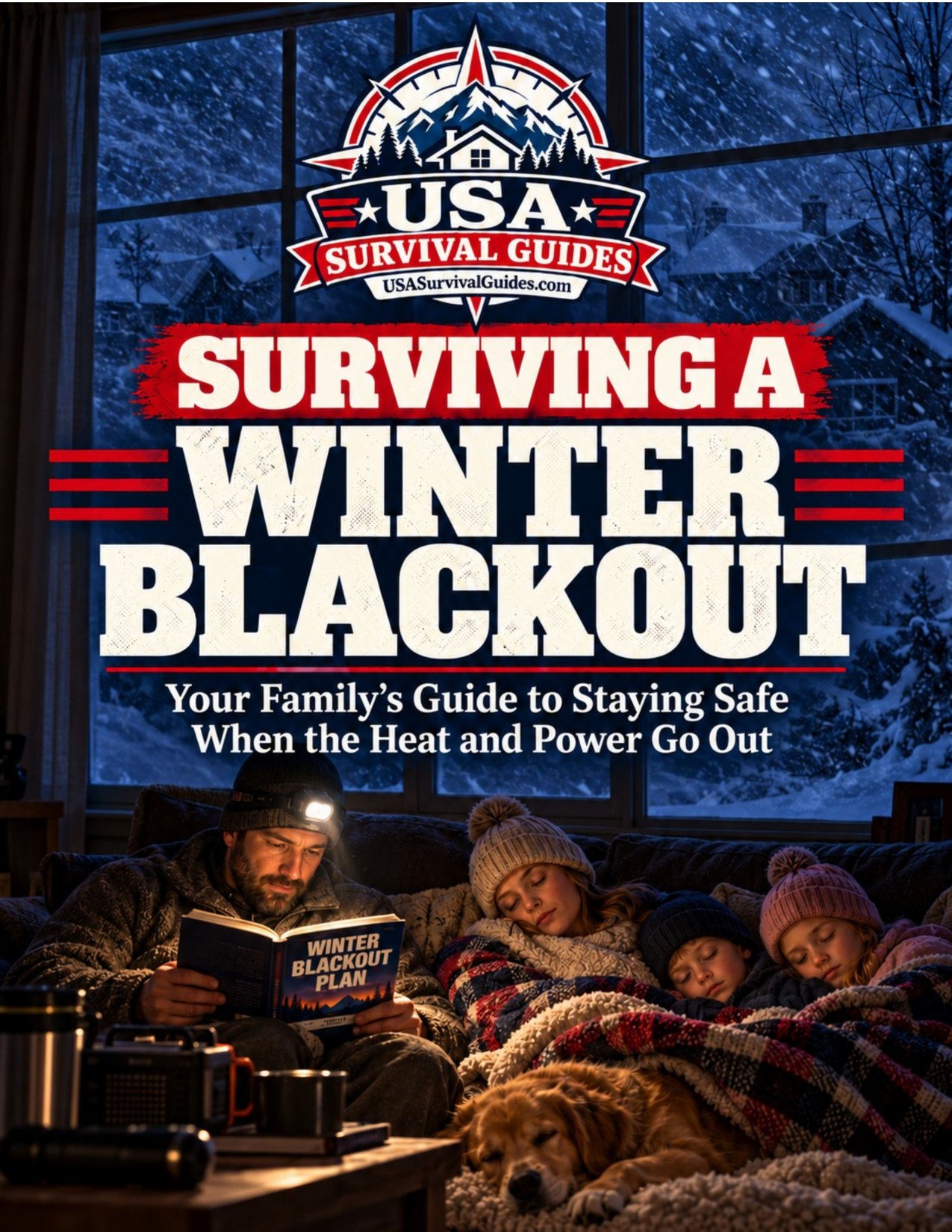
Surviving a Winter Blackout
Your Family's Guide to Staying Safe When the Heat and Power Go Out
Keep your family warm, fed, and safe when a winter storm knocks out both the heat and the power.
Get this guide
Purchase links coming soon
This guide will be available through third-party retailers in Digital PDF, Digital eBook and Printed Hardcopy formats. Purchase links will appear here as each format becomes available.
Ask us about availabilityFor educational and informational purposes only. Please read the full disclaimer before using this guide.
Look inside
Preview sample pages from this guide
Select any page to read it full size.
About this guide
What you will learn
A winter power outage is more than an inconvenience. When the heat goes out along with the lights, cold indoor temperatures, frozen pipes, icy roads, and unsafe heating choices can quickly become serious. Surviving a Winter Blackout is a 41-page family guide focused on staying safe when the heat and power go out, and on making good decisions before conditions become dangerous.
Prepare before the storm arrives
The guide begins before winter, helping you sign up for local alerts, understand the difference between a watch and a warning, identify a nearby place and a second place outside your neighborhood where you could stay, and build a kit a little at a time from what you already own. It encourages every household to make a plan that fits every person and animal in the home.
What's inside
- Chapter 1: Prepare Before Winter
- Chapter 2: The First Hour Without Heat
- Chapter 3: Keep Everyone Warm
- Chapter 4: Safe Heat, Power, and Carbon Monoxide, including generator placement away from the home
- Chapter 5: Water and Frozen Pipes
- Chapter 6: Food and Safe Cooking
- Chapter 7: Children, Medical Needs, and Pets
- Chapter 8: Stay, Get Help, or Leave
- Chapter 9: Winter Travel and Seven-Day Decisions
- Chapter 10: After the Storm and Power Restoration
Practical tools on every page
Plan Ahead boxes list concrete supplies, such as one flashlight per person, spare batteries, a working indoor thermometer, warm clothing and bedding for each person, and battery-backed smoke and carbon monoxide alarms. Situation Assessment boxes ask the questions that matter in the moment: Who needs electricity, heat, medicine, or help moving? Where can we go before icy roads make travel unsafe? Printable family planning pages help you record contacts, supplies, and decisions, and a full source list supports further reading.
Grounded in trusted guidance
Recommendations are supported by numbered references to the CDC, the American Red Cross, the U.S. Consumer Product Safety Commission, FoodSafety.gov, FDA, FEMA, and the National Weather Service, covering winter storm preparedness, frostbite and hypothermia, frozen pipes, carbon monoxide, emergency water, food safety, medicines, infant feeding, pets, and clearing snow from vehicle tailpipes.
After the storm
The final chapter helps you restart safely once power returns: checking for hazards, deciding what food and medicine to keep, restocking supplies, and reviewing what worked so your plan is stronger for the next storm.
Who it's for
Families in any region that can see snow, ice, or extreme cold, especially households with infants, older adults, people with medical needs, or pets. If your home depends on electricity for heat, this guide helps you plan for warmth, water, food, and safety when the grid goes down in the coldest part of the year.
References
Official Sources & Further Reading
Our guides draw on guidance from government agencies and other authoritative organizations. Explore the sources referenced in this guide below.
Government agencies
Centers for Disease Control and Prevention (CDC)
U.S. Consumer Product Safety Commission (CPSC)
FoodSafety.gov
U.S. Food and Drug Administration (FDA)
FEMA / Ready.gov
National Weather Service
Nongovernment organizations
Source links are provided for reference. USA Survival Guides is not affiliated with or endorsed by these organizations.