Essential Skills
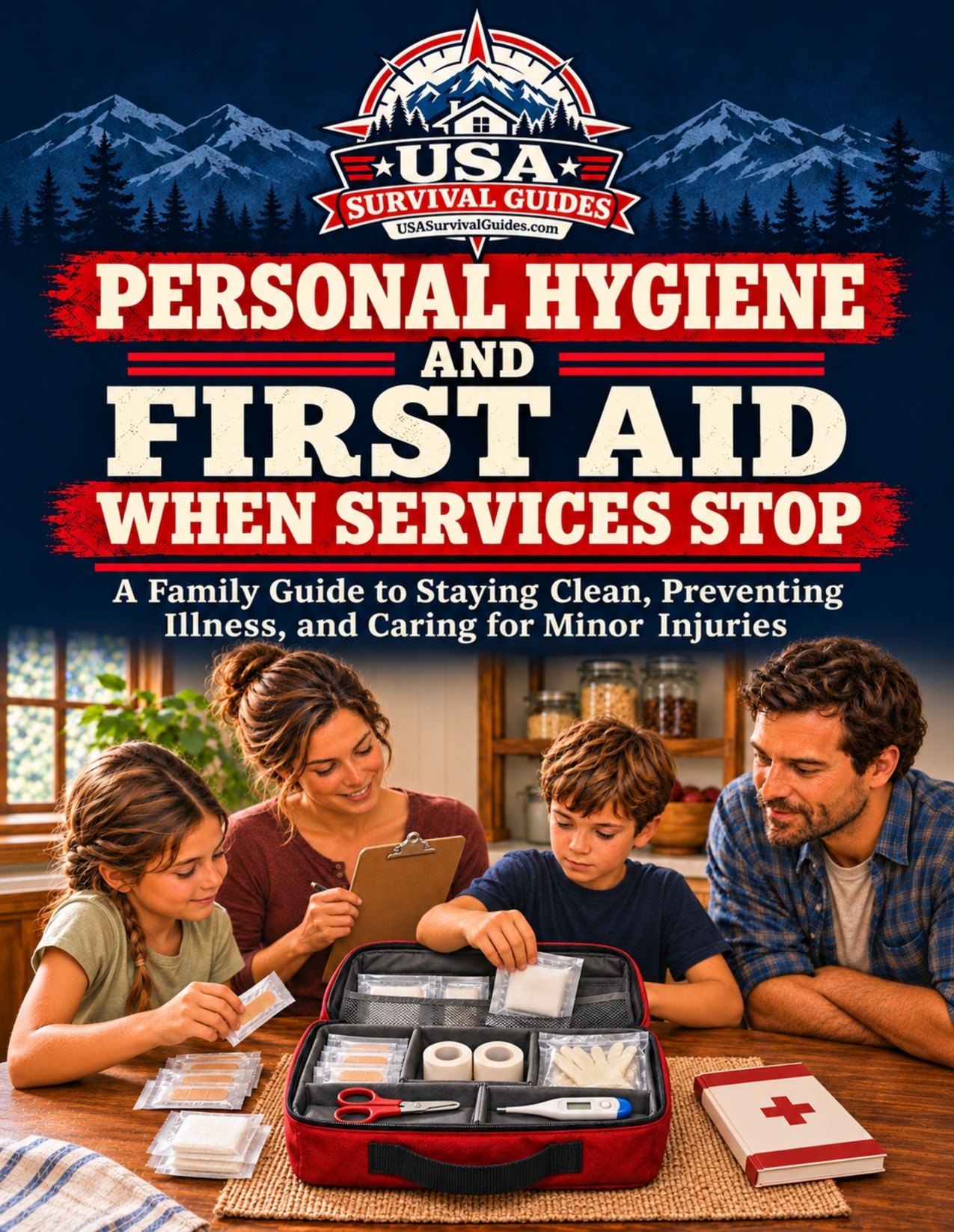
Personal Hygiene and First Aid When Services Stop
A Family Guide to Staying Clean, Preventing Illness, and Caring for Minor Injuries
Stay clean, prevent illness, and care for minor injuries when water and other services stop.
Get this guide
Purchase links coming soon
This guide will be available through third-party retailers in Digital PDF, Digital eBook and Printed Hardcopy formats. Purchase links will appear here as each format becomes available.
Ask us about availabilityFor educational and informational purposes only. Please read the full disclaimer before using this guide.
Look inside
Preview sample pages from this guide
Select any page to read it full size.
About this guide
What you will learn
When water, sewer, or trash services stop, illness can spread quickly through hands, shared towels, unsafe water, and crowded rooms. Personal Hygiene and First Aid When Services Stop is a 37-page family guide to staying clean, preventing illness, and caring for minor injuries during an emergency, written in calm, plain language.
Interrupt the journey of germs
Chapter 1 explains how germs travel from hands to surfaces and food, and how a few simple routines can break that chain: a handwashing station near the toilet and the food preparation area, covered clean water, an individual towel for every person, and keeping human waste and dirty items away from drinking water, food, children, and pets. When someone is ill, the guide focuses on care rather than blame.
What's inside
- Why hygiene matters during an emergency
- Handwashing when water is limited, including how to build a simple handwashing station
- Bathing and skin care without a shower
- Shaving, small cuts, and infection prevention
- Toilets, human waste, and trash, with a quick-reference page on turning a toilet into a temporary toilet
- Women's health and personal essentials
- Preventing illness from spreading
- Building and maintaining a family first-aid kit
- Caring for minor injuries, with a quick-reference page for caring for a minor cut
- Medical and accessibility needs
- Children, older adults, pets, and caregivers
- Restocking and practicing the plan
Practical and family-friendly
Each chapter opens with Plan Ahead and Situation Assessment boxes so you know what to gather and what to check. Illustrated step-by-step pages show the five steps to clean hands, how to check before flushing and set up a bag-lined temporary toilet, starting quantities for a family first-aid kit, and what to do for a minor burn. Printable family planning tools help you track supplies, first-aid kit contents, and restocking.
Clear limits, clear sources
The guide is careful about when to seek professional care and tells you to follow the exact local boil-water, do-not-drink, or do-not-use notice. Its sources include the CDC, the American Red Cross, and the Washington State Department of Health, covering emergency water, personal hygiene, hand sanitizer, preventing MRSA, respiratory illness precautions, wounds, burns, life-threatening bleeding, first-aid kits, septic systems, toilet use during emergencies, insulin management, and infant feeding.
Who it's for
Families who want to protect their health during a long power outage, water disruption, or storm recovery, including households caring for young children, older adults, someone who is ill, or a family member with medical or accessibility needs. It pairs naturally with our food preparation and power outage guides to complete a household plan for keeping everyone healthy at home.
References
Official Sources & Further Reading
Our guides draw on guidance from government agencies and other authoritative organizations. Explore the sources referenced in this guide below.
Government agencies
Centers for Disease Control and Prevention (CDC)
Washington State Department of Health
Nongovernment organizations
Source links are provided for reference. USA Survival Guides is not affiliated with or endorsed by these organizations.