Essential Skills
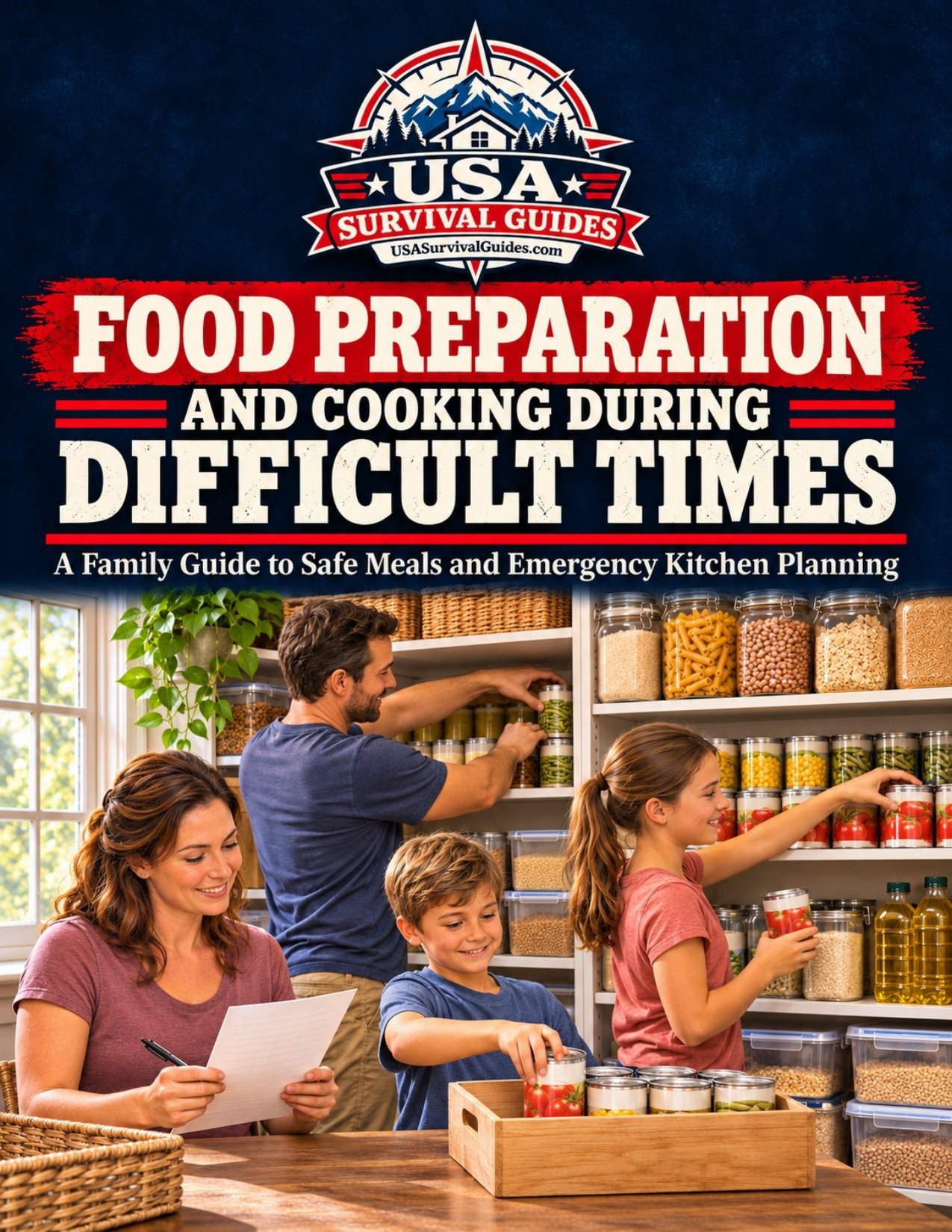
Food Preparation and Cooking During Difficult Times
A Family Guide to Safe Meals and Emergency Kitchen Planning
Plan, prepare, and serve safe family meals when power, water, or cooking fuel is limited.
Get this guide
Purchase links coming soon
This guide will be available through third-party retailers in Digital PDF, Digital eBook and Printed Hardcopy formats. Purchase links will appear here as each format becomes available.
Ask us about availabilityFor educational and informational purposes only. Please read the full disclaimer before using this guide.
Look inside
Preview sample pages from this guide
Select any page to read it full size.
About this guide
What you will learn
When the power fails, mealtime gets complicated fast. The refrigerator is warming, the stove may not work, and the water supply may be under a boil notice. Food Preparation and Cooking During Difficult Times is a 36-page family guide to safe meals and emergency kitchen planning: what to eat first, how to cook safely, and how to keep everyone fed without making anyone sick.
Start with a no-cook plan
The guide begins with a quick kitchen assessment. Is the home safe? Which outlets, appliances, gas service, and water are working? Are the refrigerator and freezer closed, and do you have thermometers, ice, and a cooler? It then shows you how to sort your options into three groups (ready to eat without heating, food that needs safe water or cooking, and perishable food that must stay cold) and why a no-cook food plan should come first.
Ten practical chapters
- Chapter 1: Assess Your Kitchen
- Chapter 2: Build a No-Cook Food Plan First
- Chapter 3: What to Eat First When Power Fails
- Chapter 4: Safe Outdoor Cooking, and why outdoor equipment never comes indoors
- Chapter 5: Propane for Cooking
- Chapter 6: Other Cooking and Heating Options
- Chapter 7: Safe Water for Cooking and Cleaning, including boil-water, do-not-drink, and do-not-use notices
- Chapter 8: Prevent Foodborne Illness, with handwashing and safe temperatures
- Chapter 9: Meals for the Whole Family, including special diets and infant feeding
- Chapter 10: Rotate, Restock, and Reduce Waste
Easy to follow under pressure
Plan Ahead boxes list what to keep on hand, such as a flashlight, paper and pen, a manual can opener plus a spare, safe water, a food thermometer, and at least one ready-to-eat meal for each person. Situation Assessment boxes help you decide whether a meal can be prepared with the water, power, fuel, equipment, and time available. Illustrated pages, including a build-a-plate-without-power guide and a newer-behind, older-forward rotation diagram, make the information approachable for the whole family. Worksheets at the back help you inventory your pantry and plan meals.
Backed by official food safety guidance
The guide's sources include the CDC, FoodSafety.gov, Ready.gov, and the Pipeline and Hazardous Materials Safety Administration, covering power outage food safety charts, safe minimum internal temperatures, emergency water supplies, hand sanitizer use, infant feeding in emergencies, and cautions against refilling small disposable propane cylinders.
Who it's for
Parents and home cooks who want to keep the family fed safely during an outage, storm, or other disruption, and anyone building an emergency pantry they will actually use, rotate, and restock. Keep it in the kitchen with your manual can opener and food thermometer.
References
Official Sources & Further Reading
Our guides draw on guidance from government agencies and other authoritative organizations. Explore the sources referenced in this guide below.
Government agencies
Centers for Disease Control and Prevention (CDC)
FoodSafety.gov
Pipeline and Hazardous Materials Safety Administration (PHMSA)
FEMA / Ready.gov
Source links are provided for reference. USA Survival Guides is not affiliated with or endorsed by these organizations.