Essential Skills
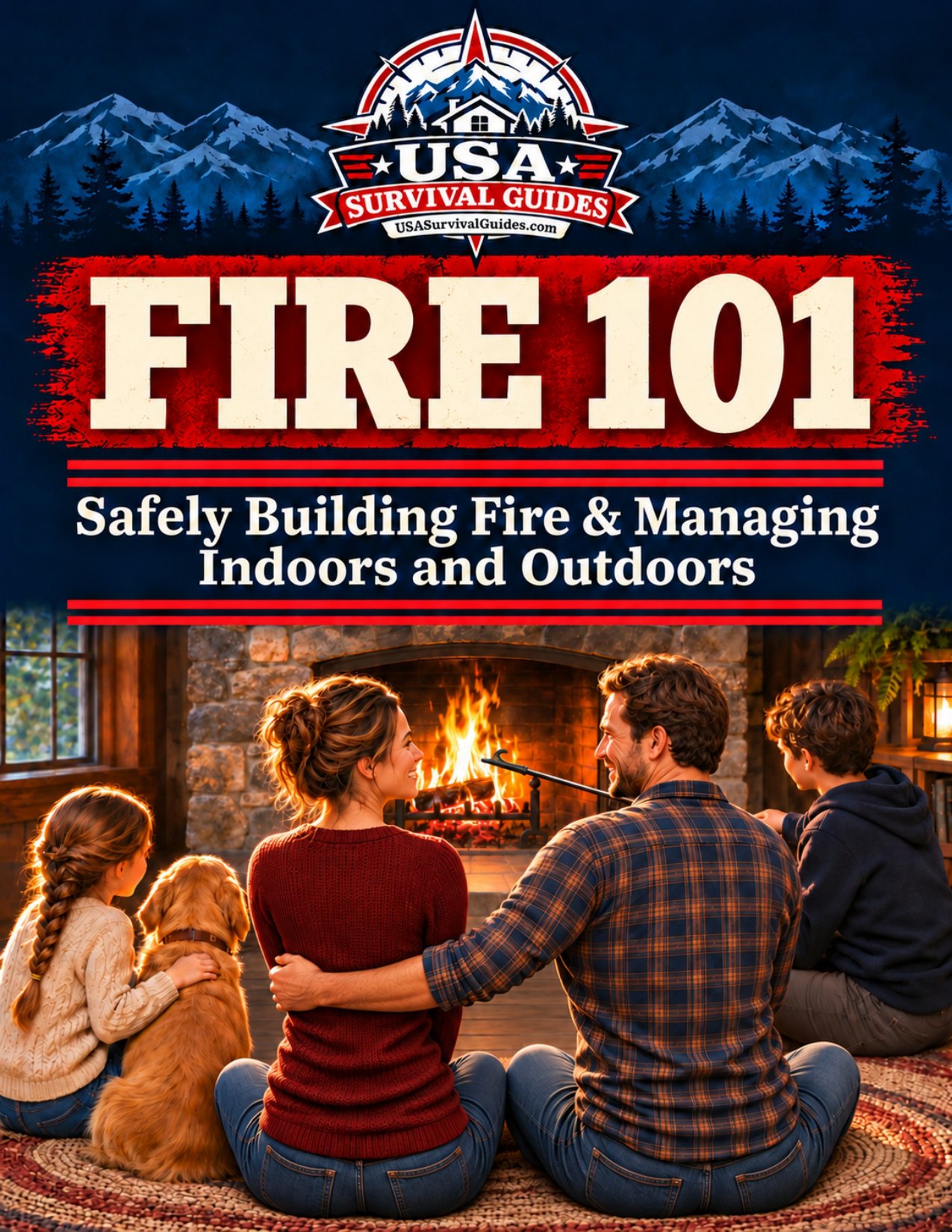
Fire 101
Safely Building Fire and Managing Indoors and Outdoors
A complete family guide to building, managing, and safely putting out fires indoors and outdoors.
Get this guide
Purchase links coming soon
This guide will be available through third-party retailers in Digital PDF, Digital eBook and Printed Hardcopy formats. Purchase links will appear here as each format becomes available.
Ask us about availabilityFor educational and informational purposes only. Please read the full disclaimer before using this guide.
Look inside
Preview sample pages from this guide
Select any page to read it full size.
About this guide
What you will learn
Fire can provide warmth, a way to cook, and a useful skill to practice together, but a dependable fire begins with preparation. Fire 101: Safely Building Fire and Managing Indoors and Outdoors is our most extensive guide, a 97-page plain-language handbook covering fireplaces, fire pits, campfires, grills, fire-starting methods, and family fire safety.
Seven color-coded parts
Each part has its own color and page-edge tab so you can flip straight to the section you need.
- Part 1, Understanding Fire: the three things every fire needs; tinder, kindling, and firewood; choosing and storing firewood
- Part 2, Fireplaces and Wood Heat: getting to know your fireplace, inspection and maintenance, lighting and building a fireplace fire, dos and don'ts, fireplace problems and what they may mean, and safe ash cleanup
- Part 3, Outdoor Fires, Fire Pits, and Grills: choosing a safe place, fire pit options, building and managing a campfire, putting it out completely, charcoal and propane grills, and cooking over a wood fire
- Part 4, Ten Fire Starting Methods: ignition sources and fire starters, ten ways to get a fire started, and the facts about vegetable-oil-soaked rags
- Part 5, Kits and Conditions: a home fireplace kit, an outdoor fire kit, and fire starting in difficult conditions
- Part 6, Health Emergencies and Family Safety: smoke and carbon monoxide, burns, escapes, fire extinguisher types and how to use them, and teaching children about fire
- Part 7, Checklists and Worksheets: one-page checklists, a fire-building troubleshooting guide, and practice pages and household records
Learn it step by step
Plan Ahead boxes list supplies and suggested practice quantities. Situation Assessment boxes help you decide whether the place, conditions, and equipment are suitable; an unanswered safety question is a reason to pause. Step by Step sections explain each activity in order, Fire Safety boxes flag actions that could cause a fire, burns, or carbon monoxide exposure, and Practice Together sections turn reading into short, supervised exercises that begin with an unlit demonstration.
Safety comes first
The guide is clear about limits: outdoor grills and fire pits stay outdoors, charcoal is never used indoors, even in a fireplace, and you should always read the instructions for your own equipment, because a method suitable for a campsite may be unsuitable for a stove, insert, or gas fireplace.
Thoroughly sourced
Fire 101 lists 44 references, including the U.S. Fire Administration, EPA, the National Park Service, the U.S. Forest Service, USDA, OSHA, the American Red Cross, the National Fire Protection Association, the Chimney Safety Institute of America, and Scouting America.
Who it's for
Homeowners with a wood-burning fireplace, families who enjoy backyard fire pits and camping, grill owners, and anyone who wants dependable fire skills for an extended power outage, learned and practiced safely together.
References
Official Sources & Further Reading
Our guides draw on guidance from government agencies and other authoritative organizations. Explore the sources referenced in this guide below.
Government agencies
U.S. Environmental Protection Agency (EPA)
U.S. Fire Administration
National Park Service
USDA Forest Service
USDA Agricultural Research Service
USDA Food Safety and Inspection Service
FoodSafety.gov
Occupational Safety and Health Administration (OSHA)
Utah Division of Emergency Management
Utah State Historic Preservation Office
Town of Clinton, NJ Fire Prevention Bureau
Nongovernment organizations
National Fire Protection Association (NFPA)
Chimney Safety Institute of America (CSIA)
American Red Cross
Scouting America
Utah State University Extension
Source links are provided for reference. USA Survival Guides is not affiliated with or endorsed by these organizations.